
 On the darkest of nights, when there seem to be no options – no solutions to the despair you feel, how will you find your way? When it seems like there is no hope left, will you hold out hope for your own fire?
I’d like to write about suicide, and the option that takes just the tiniest spark of hope: living. Ask 10 people for their thoughts on suicide, and chances are you will receive 10 completely different responses. Suicide is a word packed with 100 times more emotion than syllables. And even in sitting down to write about it today, I had to wait for the whirl of emotions to slow before I could hear the one constant resounding thought: I value life. I value life. I didn’t always though. I was once an impulsive and shy kid with few friends, the target of ridicule by classmates – once or twice even by teachers. I knew rejection. I knew loneliness. I even knew the pain of grief when cancer claimed my mother . I knew feeling directionless. Feeling unsure of myself. Of having no one to turn to who would truly have my back. One day, during my Masters degree training, I took a class on suicide risk and intervention. After learning crisis intervention and theory, we were required to demonstrate our suicide intervention abilities by role playing client and clinician. When it was my turn to play the role of the ‘client’, I harnessed those many years past from my youth, when living another day felt unbearable. And while I could still acknowledge the pain of those days, I could barely get the words out in order to “act” suicidal in the moment. And that was when it dawned on me: I value life. I could not even pretend for one moment that I didn’t want to be alive. I have bad days and sad days. I have lonely days and grumpy days. But I also have good days and joy-filled days. I have peacefully quiet days and blissfully calm days. I have days when I feel invisible but I have so many more days when I love and value myself. The thoughts and emotions that awaken thoughts of suicide are a signal that you are in pain. That you are hurting and feel powerless to create change yet that you desperately need to create that change in order to be ok. Sometimes it might feel as though that change is impossible. Sometimes it might feel as though the energy required to act on creating that change is just too much. So what can you do? We need to get out of our own heads. The view one takes of the world when feeling depressed or anxiety-ridden can become a habit and can breed more thoughts that are characteristic of depression or anxiety. We need to really look at the people in our life and ask the tough questions. We need to turn towards the people who care and we need to let them care. We need to be kind – even to ourselves. We need to listen. We need to be present. And in doing so, we can ignite the tiniest spark of hope to keep going, to find your fire – because this life really can be good. If you are feeling suicidal, please reach out for help. Call, text, email, talk. You have more worth than you know. If there isn’t someone you can talk to, or a Crisis Line in your area, check out The LifeLine App in the App Store.
0 Comments
One key way we build self-esteem is by accomplishing the goals we set for ourselves. Every accomplished goal trickles into our sense self: it feeds our personal integrity, that sense of trust we have in ourselves that we will do what we set out to do. Our proven ability, even though only proven to ourselves, contributes to feeling good about ourselves. But what happens when a negative core belief such as “I’m not good enough” has a stronghold over our thoughts? Negative core beliefs are false self-referencing beliefs, and they pack a pretty heavy punch. When a negative belief screams out in our brain, a powerful emotional response reverberates throughout our memory network and our body responds with much the same level of activation as when the negative belief was created – even though in the present moment we are safe. Experiences from childhood may have planted the seeds of the negative belief, and then additional life experiences may have strengthened them. Because these negative beliefs have been reinforced over and over again, they feel very true. “Negative beliefs come to create a perpetual filter through which we view ourselves and our world” (Parnell, 2007). Negative core beliefs feel true but they are not true. Because these beliefs are capable of infiltrating all of our daily activities, social interactions, and inner dialogue, we need an equally powerful method for countering them. Counselling is an excellent way to heal early wounds and develop coping strategies for the present. There are also techniques we can focus on between sessions to practice being present with new, positive belief systems.  Three Little Things:
For this journaling activity, you are going to want to use a beautiful book: one that makes you smile when you look at. You won’t be journaling in the traditional style: this will be more of a ‘healing journal’, one that you are going to want to flip through often, to remind yourself of what you have written. Each evening before you get ready for bed, take 10 minutes to sit down and reflect on 3 things you did well that day. These are the little things that we often over-look, that there are no accolades for. When we take the time to notice, we develop compassion for our selves. We start to see the evidence that yes, we are human and we make mistakes, but also that we are also inherently good and worthwhile beings. If you find that you are having trouble getting started, try reflecting on the list of prompts below. Writing Prompts for Reflection:
For more strategies on journaling to build self-compassion (and a really good read…) check out Dr. Kristin Neff’s website: self-compassion.org. Resources: Parnell, L. (2007). A Therapist’s Guide to EMDR: Tools and Techniques for Successful Treatment. New York NY: W.W. Norton & Company. When I first told my Nonna that I was going to be a Counsellor, I was 20 years old and had just switched out of an orientation to teaching stream in university to a Psychology major. With an appalled look on her face and an emphatic inhale, she stated in her thick Italian accent “Why you wanna sit and listen to peoples’ problems?” It wasn’t a question, but rather a statement laced with judgment and condescension. My response was something along the lines of “I can’t explain it”. I suppressed my headstrong must-fight-for-what-I-believe-in feisty inner warrior and simply hugged her. 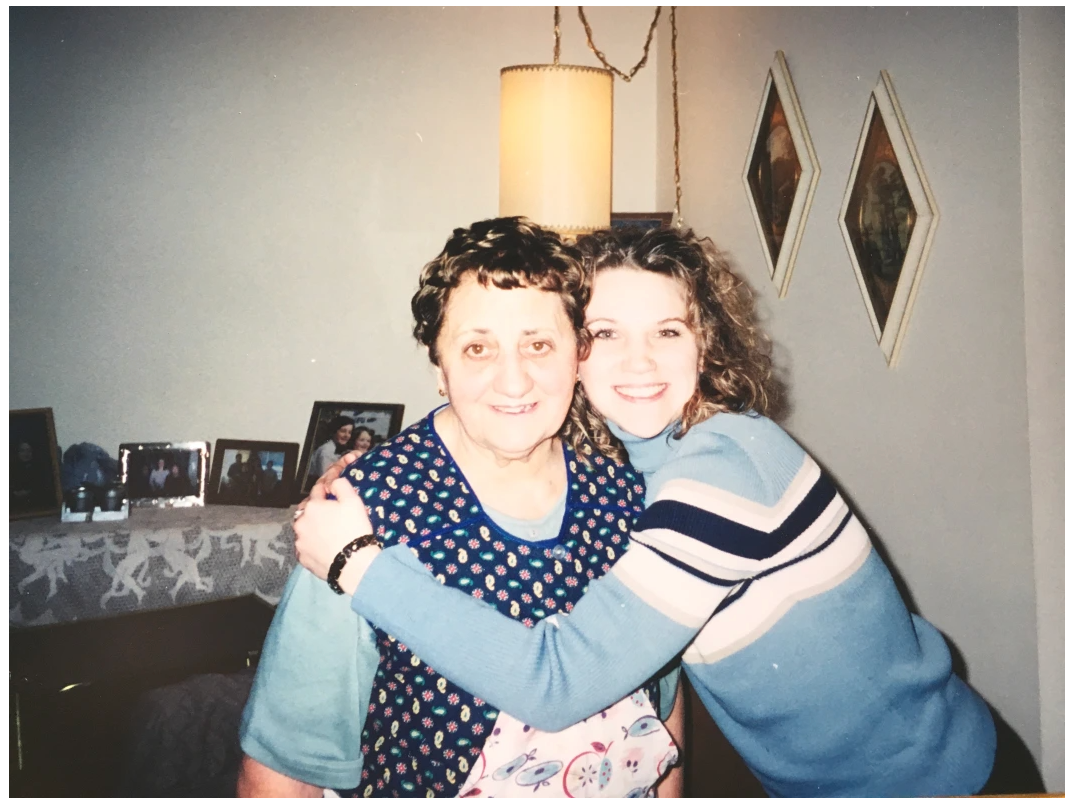 But her statement sat with me. Not because I doubted my career choice, but rather because it gave me insight into how little my Nonna understood about asking for and receiving help. Raised in a farming family by parents who lived through the depression in southern Italy, then witnessing first-hand the impacts of the second world war, asking for emotional support had never become her go-to coping strategy. For every loss she experienced, (and there were many), she donned her symbolic black clothing and shut off the hurting part of herself. It wasn’t my place to fight with her. I could only love her fully, for she was coping in the only way she knew how.
Yes, the job of a Counsellor is to listen – but it is also so much more. It is about motivating and inspiring people to be the best versions of themselves, to learn how to invite in the change they are so desperately seeking. It is about helping people reconnect with hope after life experience has rattled it. It is about discovering the strength and courage they forgot they had. It is about cultivating resilience. It is about discovering how to be kind to one’s self, in a life where that was potentially never taught or even discouraged. The safety of the counselling office becomes a place to practice holding positive beliefs that just aren’t rooting due to the busy-ness of life. It’s a place to deconstruct shame, to grieve losses, to breathe deeply and fully, and to acknowledge ones’ worth. Every single counselling interaction is a chance to let someone know that they matter, that they are not struggling alone, and to foster hope. That is why I choose this career, and that is why I love what I do.  Shame is a concept that comes up a lot in the course of working with people in counselling. Shame is that little nagging voice in the back of one’s mind, constantly repeating variations of “I’m not good enough” and “I’m such a failure”. Shame itself is a fear-based emotion bringing with it a fundamental sense of inadequacy and lack of belonging. It is a sense that everyone can see our internal brokenness, our inherent flaws. Shame often carries with it a sense of being worthless, unredeemable, unlovable, humiliated, less than, smallness, and weakness. It creates a distress within us that can be so activating, making us feel a dissonance from our authentic self; making us question our very sense of self.
When working with individuals who have experienced abuse, there is a significant level of shame that often blocks healing and moving forward. While the feeling of shame can be debilitating and confusing, thanks to people like Brene Brown, there are now You Tube videos and books and workshops that can help us through the experience of shame. To take it one step further though, I’d like to write about how shame comes to bubbles up in the first place, specifically in the context of abuse. My intention is that with a little theory, we can normalize the experience of this insidious feeling, develop action steps to process it, and thus help to dilute shames’ otherwise pervasive effects. To explain this pervasive sense of shame that can result from abuse experiences, we have to draw on learning theory. Specifically, classical conditioning (think Pavlov and his dogs!). In this case, we want to understand evaluative conditioning. Evaluative conditioning refers to “an attitude development or change toward an object as a result of that object’s co-occurrence with another object”. Complicated description, yes – but here is how it breaks down: when being abused, the abuse experience (which is recognized as “a very bad experience”) gets paired with the self, and the person thus (unconsciously) negatively evaluates themselves as “I am bad”. In other words, evaluative conditioning is an unconscious, automatic, and persistent transfer of one’s dislike for one stimulus to be transferred onto another. In the case of sexual abuse, the disgust, shame, and fear associated with the abuse gets associated with physical touch, body odors, sex-related sounds, and even one’s own body; which in the language of shame says: “I am bad”. The disgust, shame, and fear associated with the sexual abuse can also come to be paired with physical touch and sex in general, which has the self-language of: “I am dirty and disgusting”. If the perpetrator was shaming during the abuse, one might come to pair the abuse with emotional experiences. This means feeling ashamed of your emotional experiences. In summary, it is in this way that shame becomes a result of evaluative conditioning of the self. It is a voice within that quietly taints all daily experiences. The feeling of shame can be overwhelmingly debilitating at times, causing people to freeze or flee or become defensive in life and in relationships. Shame can create confusion, and fear, and anger. It it can inhibit joy, sexuality, sadness, and hurt. It can stop us from fully living life. If you have experienced abuse and recognize these patterns as playing out in your life, please know that you are not alone and that there is help. Through counselling, which starts first with building trust and connecting with safety in the counselling relationship, you can develop new strategies for noticing and releasing shame. You can work on counter-conditioning the conditioned pairing (for example, unpairing self from disgust), and cultivating empathy and appreciation for all parts of self. That equals self-compassion. Every single one of us is worth taking up a bit of space in this world – to live our life and fulfill our dreams. If shame is stopping you, please consider working with a Counsellor to heal. References:
Disclaimer: This is a very simplified overview of evaluative conditioning / learning theory and the shame that stems from abuse experiences. The Art of The Possible With Animal-Assisted TherapyThe Beginnings of a Counsellor: My burning desire when I entered the field of counselling was to be of service to people who felt stuck. The first job I had in the counselling field, when I was fresh out of university, was for an employment counselling agency. My role was to work with clients who were unemployed, and assist them in securing employment. Sounds straightforward enough, right? What I actually discovered very quickly was that my clients were without work for very significant reasons: depression, post-traumatic stress, and anxiety, to name a few. Many of my clients had immigrated to Canada from countries in war, extreme poverty, and chaos. These folks had witnessed and lived through horrors and tragedies beyond description. It didn’t feel right to keep the focus on work-related goals when their emotional life was in need of nurturing. It also didn’t feel right to refer them to someone else after they had already been bounced around to so many workers. But ethically, I didn’t have the skills to provide mental health counselling. An undergraduate degree in psychology doesn’t fully equip a person with the necessary skills to be a Counsellor. While I had a very good work relationship with my employer, she was constantly reminding me to keep my focus with clients on work-related goals, and to refer them out for everything else. Needless to say, employment counselling wasn’t the profession for me! I applied to the University of Calgary and after 3 brilliant-laborious-inspiring years I graduated with a Master’s degree in Counselling Psychology. It’s hard to talk about the tough stuff! It is so much easier to talk about the things that make us feel comfortable, to stay within our comfort zone and not push the limits of our window of tolerance. Suppression and denial can become habits and if we stay disconnected from our strong emotions for too long, eventually we start to fear having emotions. But connecting with emotions (in titrated ways) and pushing the limits of our comfort zone is exactly how healing, insight and awareness, and change start to happen. My next burning desire as a Counsellor was to make it not so damn hard for people to connect with the tough stuff. I love animals, and animals have always been a source of comfort for me during difficult times. Perhaps an animal in the counselling room would be comforting to clients. Over the years that followed, I researched and learned about animal-assisted therapy, eventually concluding that a service dog would be the route to follow. Enter 2015: the year of the dog
Okay, not really. In the Chinese zodiac it was actually the year of the sheep. But in my family, it was the year of the dog. I had decided on a breed and a trainer, and flew all the way across Canada to adopt Maven, a Shiloh Shepherd. The adorable fluff-ball… with razor sharp teeth! Maven was a super cute rambunctious ball of fluffy fur. But looks can be deceiving! At 3 months old, Maven nipped excessively, jumped up, and defecated in the house. Everyone wanted to cuddle her but no one dared get too close! I am pleased to say that by 4 months, Maven had settled down and was no longer nipping (and was successfully doing ‘her business’ outside). By 6 months, I began working with 2 fantastic trainers: Cheri Kolstad, a service dog trainer based out of Penticton, and Vernon’s own The Crate Escape obedience dog trainer Vanessa. When Maven was 1 year old, I began taking her to work with me. While she was largely still in training, it was amazing how transformative sessions became with her present. Please note: Having a dog in session isn’t for everyone, and I always ask a client’s permissions prior to bringing Maven in.  In her book ‘Healing from Trauma”, Jasmine Lee Cori outlines the following list of personal resources that help when healing from traumatic experiences. Personal resources are inherent capacities which individuals possess, such as their strength and abilities, healthful activities, the ability to regulate affect, a caring and trustworthy support system, and so forth. Cori additionally states that personal resources are healthy patterns, ones which create a sense of feeling good and accepting oneself in ways that are truthful, and not based in self-deception or indulgence.
If you are just starting your healing journey, or even if you are well into it, please review Cori’s list of helpful capacities below. Each capacity reflects something which can further or enhance our healing. As you read through the list, consider which capacities you possess, and which you might like to develop. How might you build and develop these capacities in your life?
Learn more in Jasmine Lee Cori’s book, Healing from Trauma: A Survivor’s Guide to Understanding your Symptoms and Reclaiming your Life. |
AuthorSusan Guttridge is a trauma-informed Master level Counsellor with the clinical designation of Canadian Certified Counsellor (CCPA). She has 20+ years experience providing individual and group therapy. Archives
January 2024
Categories
All
|






 RSS Feed